Transcript
00:48
Michael Haley: Hello everybody. Welcome to the Connected Cold Chain podcast. My name is Michael Haley with SkyCell. Today we'll speak about how to move from a service provider to a strategic risk partner. To explore this topic, I have the delight to introduce my guest today, Kunal Punjabi from DSV.
01:07
Kunal Punjabi: Thank you, Michael, and thank you for having me here. It's exciting to be here and talk about cold chain, which is very close to my heart. I've been in the forwarding industry for almost 25 years now, and I've dedicated 15 years to cold chain, pharmaceuticals, and healthcare. This is a topic I'm really passionate about.
01:30
Michael Haley: I'm really thrilled to have you. You could be instrumental in sharing with our participants what connected cold chain means within the forwarding industry and for pharma clients. So with no further ado, let's jump right in. A recent study based on insights from 120 senior leaders across pharmaceutical companies and freight forwarders highlights growing tension in temperature-controlled supply chains, despite significant investments in infrastructure and monitoring technologies. Ninety-two percent of respondents say that risks like delays, temperature excursions, and product loss have increased. At the same time, 61% believe reliability has improved only marginally over the past 10 to 15 years.
02:30
Michael Haley: Those findings suggest that even with better tools and infrastructure, the industry is still struggling to close the gap between investment and real reliability. Against that backdrop, let me start with this. What are pharma companies really looking for in a logistics partner today, beyond just getting the job done at the right price?
02:56
Kunal Punjabi: That's a great question. I would start by saying that executing properly, having operational strength, and of course a competitive price are a given. Pharma companies now expect their logistics service providers to move from a vendor relationship to a strategic partnership. Ultimately it's all about the patient. The first key expectation is end-to-end supply chain visibility. That's a prerequisite. Pharma companies want real-time information on what's happening, whether the ETA changes or a disruption is coming, and they want it proactively.
03:46
Kunal Punjabi: They're no longer satisfied with tracking or reporting alone. You need predictive analytics, to keep them informed and help mitigate issues before they become a problem for the patient. The second is quality and compliance. Given the regulatory landscape pharma companies operate in, it's equally important that their partners know what they're doing. They want every logistics service provider to be GDP compliant, with proper knowledge of [unclear] management and root cause analysis, and a quality process and system in place.
04:35
Kunal Punjabi: Third is infrastructure: cold chain infrastructure such as temperature-controlled warehouses, temperature-controlled handling capabilities, a QMS, and trained people who can guide customers on packaging and what needs to be done. The last element is risk mitigation and resilience. After Covid and numerous black swan events, they've wanted their forwarders to step up and bring resilience to the supply chain, whether that means moving cargo through different airports, bringing in charter aircraft, or doing something out of the box. Those are the key expectations pharma companies have of their forwarders today.
05:26
Michael Haley: I want to go back to something you said, because you're consolidating a couple of subjects here: compliance, regulation, visibility. This leads me to technology. At DSV, you really separate yourselves from competitors in the space of technology. Could you share with the viewers how DSV uses technology to differentiate on visibility, on regulatory requirements, on understanding risk, and on the quality piece that sets your organization apart?
06:01
Kunal Punjabi: Absolutely. As I mentioned, this is very important for pharma customers. As the largest logistics company in the world, we're thinking about how to be not only the largest freight forwarder, but also the best in the healthcare industry. The key is using connected devices, with connectivity through ERP systems and APIs, to give visibility on a real-time basis. That could be temperature, an excursion, or humidity exposure, and what is being done about it. All this information helps us take action and do contingency planning before things impact the patient. And at the same time, we can flow this information into our customers' ERP systems.
07:02
Michael Haley: That connected ecosystem, to make challenging decisions when time is of the essence, is a real differentiator for your organization.
07:11
Kunal Punjabi: Absolutely. Reporting is good to have, but it's better to have the information beforehand so you can take corrective action before things go wrong, before the product loses efficacy and quality doesn't allow you to release it to the market.
07:26
Michael Haley: Great. On to our next question, which I think will open up a lot of dialogue. What does it actually take to move from reactive support to becoming a proactive risk advisor for pharma?
07:41
Kunal Punjabi: The first thing that has to change is mindset, the mindset of the people working for you. The other element is data use. Data is priceless these days, so you want to use it effectively, along with engagement with the customer, being able to talk to them. All this operational data is important, but you have to use it proactively. To become proactive rather than reactive, you build real-time visibility. You need systems that give you all the information: real-time tracking, temperature information, humidity information.
08:32
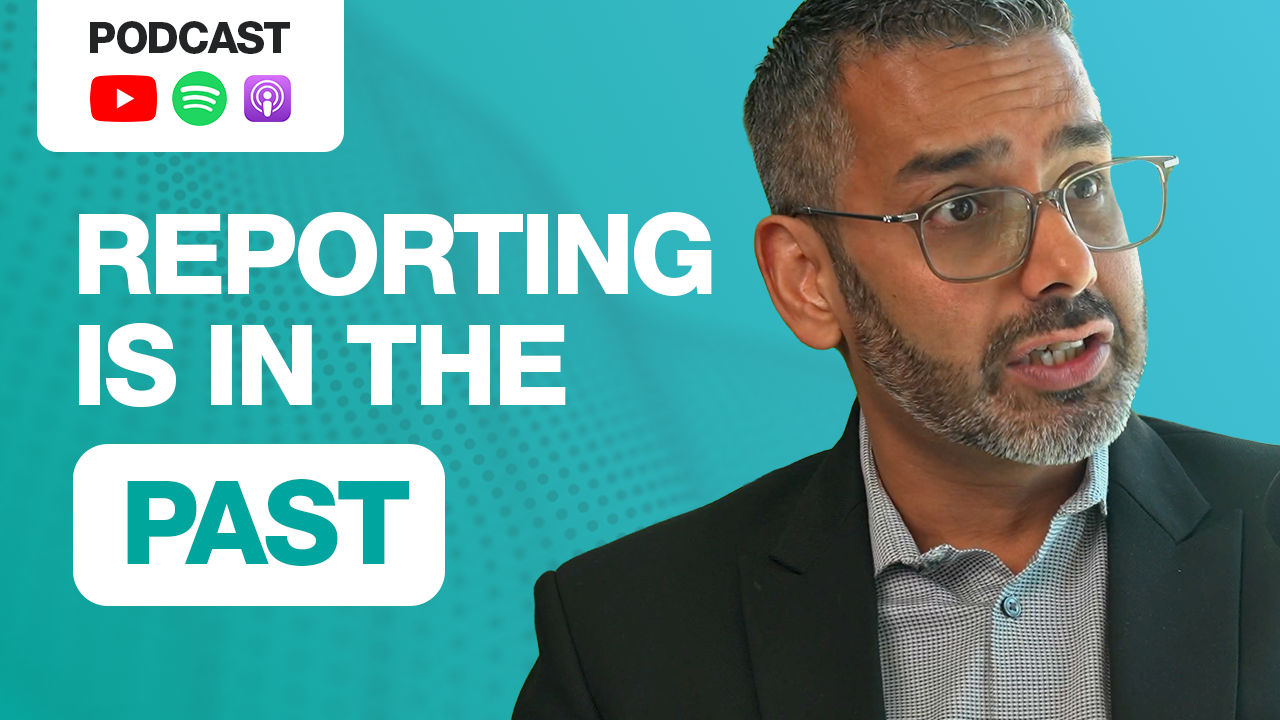
Kunal Punjabi: You need tools that help with predictive analytics. That's the key. Reporting is of the past. You want to know when things go wrong, but you want the information before they go wrong. It needs to be predictive analytics that help you take decisions proactively. You also need control towers, because you want someone monitoring these shipments 24 hours a day, seven days a week, following the milestones. If something doesn't go as per the process, there need to be escalation steps: what do we do to mitigate the loss and take corrective action?
09:30
Kunal Punjabi: Another important element is being able to plan for whatever is going to happen. We've seen a lot of disruptions in the market, and we can't predict what will happen. But following it closely and giving that information to our customers proactively is the key to moving from reactive to proactive in the future.
09:58
Michael Haley: I love that answer. There's some connective tissue between question one and question two, around technology and being a proactive advisor. I want to come back to data within DSV. What technology do you use to set up a customer's lane and ensure visibility beforehand, so you can say, this lane looks successful, but this lane may carry a little risk? How do you use data to manage those conversations with customers long before shipments are executed?
11:03
Kunal Punjabi: Absolutely. The key is to do a lane risk assessment before your shipment starts moving. For any new lane we implement for any customer, we do a detailed risk assessment. We use one of our partners, Validaide, which we've been using for many years, and we've seen the technology improve. We make sure a lane risk assessment is done for every origin and destination pair, using different scenarios: summer, winter, and the airline schedules, because airlines change their schedules along with the temperature. There may be more flights in summer and fewer in winter, so you take that into consideration.
11:24
Kunal Punjabi: You also want to make sure the packaging your customer is using has enough buffer built in if things go wrong, because things always go wrong. If we see a pattern, say congestion at certain airports at certain times, we use different airports and have a backup or secondary option if possible. If the packaging is too tight for the transit time, we look for an alternative. And we make sure the airports where cargo is routed have temperature-controlled rooms, so the product sits in a controlled environment, which helps its efficacy and extends the life of the packaging.
12:13
Michael Haley: I love using data and technology to be agile in decisions long before the shipments take place, and to have those conversations with your clients: we see this, we see that, do you agree? Being collaborative like that sets you up to succeed long before the shipment engages in a transit lane. That's powerful.
12:33
Kunal Punjabi: Absolutely. We take weeks of preparation. Everything is documented, all SOPs are created, and lane risk assessments are done before you start anything, especially for these high-value pharma shipments. It's not only the value. At the end of it there is a patient. You want to set everything up so there's a minimum chance of failure. I can't say it's zero, but the way we set this up before it goes live, the chance of failure is minimal.
13:05
Michael Haley: With today's experiences, supply chains are getting harder and harder to manage. There are new challenges every day. That leads me to my third question, which comes with a little challenge to it. Where do you think freight forwarders still underestimate the role they can play strategically in pharma supply chains today?
13:32
Kunal Punjabi: Great question. I've been in the forwarding industry for almost 25 years. The assumption, even among freight forwarders, is that their job is moving cargo. But it's not only moving freight. Especially for pharma, it's about helping design the supply chain, helping de-risk it, and helping optimize it. Those are three key areas where forwarders play a role. And pharma companies are not using their freight forwarders as much as they could, given the information forwarders have.
14:18
Kunal Punjabi: In my experience, pharma companies need to start involving their forwarder in supply chain network optimization. A forwarder deals with multiple companies in the same market. They know what different companies are experiencing, which are the best gateways, which are the best airlines, and the best way to get cargo there on time and efficiently. The other thing is product launches and new markets. Pharma companies tend to bring in logistics at the end, when they're launching a new product. Everything else happens first, and then logistics comes in.
15:02
Kunal Punjabi: Pharma companies should involve their forwarder well in advance when they launch a product or enter a new market. It lets them draw on the forwarder's experience of the challenges seen in that market before, because someone else must have gone there already. What are the regulatory requirements? What compliance challenges have others faced? Getting this information is key. The third element, which is coming up now, is sustainability. Pharma and other companies are moving from phase one and phase two of sustainability to phase three.
15:45
Kunal Punjabi: That's where a forwarder can come in. First, a forwarder can tell you your CO2 footprint. Not knowing your CO2 footprint is a big challenge, and forwarders can provide that. They can help you optimize, use different routings, and use different aircraft to reduce your footprint, which pharma companies don't always realize. If nothing else works, there's the option of sustainable aviation fuel, which pharma companies can co-invest in with airlines and shipping lines, and sustainable marine fuel. There's a long way to go on both the forwarder side and the pharma side, to start using your freight forwarder well in advance and as a partner, rather than just someone who moves freight from point A to point B.
16:53
Michael Haley: From my past forwarding experience, I've always seen the forwarder as the conductor of the symphony, keeping all the different instruments together, tuned, and correct. Without that freight forwarder positioning, there's chaos in the song. You can't create a beautiful song without someone leading the instruments. The forwarder plays a very important part in keeping everybody, vendors and suppliers alike, in the same cadence and the same direction.
17:25
Kunal Punjabi: Absolutely.
17:26
Michael Haley: I want to go back to a topic you mentioned, one we hear more and more. It took some time to gain traction, but it's spoken about more and more now: sustainability. When it first came out, I don't think people knew how to pronounce it, or spell it, or what it applied to. Fast forward to today, and it's a topic discussed constantly and positioned in RFPs and RFQs from our clients. I'd like you to take a few extra minutes to expand on the outlook for sustainability within DSV in the coming years. What does that look like from a DSV perspective?
18:18
Kunal Punjabi: Sure. As I mentioned, pharma companies are now looking at Scope 3, and logistics is a big component of Scope 3 for everyone. The key is having visibility into your CO2 footprint. DSV now provides the CO2 footprint to our customers. We also have platforms where we can take information from other forwarders and give you a consolidated view of your footprint. It doesn't need to move with DSV. It could move with any forwarder, as long as you're able to share that information. That's the starting point.
19:02
Kunal Punjabi: There are different ways to reduce your CO2 footprint. The first is offsetting, where you put money in somewhere, buy credits, and that helps offset the CO2 you have. The other is insetting, where you actually make a difference to the CO2 outflow. As a forwarder, we're looking at our own footprint and investing to reduce it by buying sustainable marine fuel and aviation fuel, through partnerships with shipping lines and airlines. That's where we support pharma companies. If you want to reduce your footprint, there's one atmosphere. Even if the fuel isn't physically used on your shipment's leg from point A to B, we inject that much sustainable aviation or marine fuel into the system to reduce the footprint.
20:10
Kunal Punjabi: Of course, this comes with a cost, and companies now do have a budget for it, because it's important. It's getting budget allocation from different companies. If there's no budget, we have options such as looking at which aircraft are being used. Older aircraft have a larger CO2 footprint than newer ones. We can guide our customers on which type of aircraft to load more and which routing to use to reduce their CO2. These are different methods we use as a forwarder to help customers reach their goal.
20:53
Michael Haley: Monetization of CO2 is the catalyst that moves it from a thought to an action. Until CO2 was monetized, no one really knew where to put sustainability as a project or a focus. Nowadays we're getting to the point of putting a dollar sign next to sustainability, and that gets it pushed and driven. I have a strong appreciation for organizations like DSV and SkyCell that put a front focus on sustainability. At the end of the day, once I'm gone, I want to leave this earth for my kids in a great place to enjoy what we enjoyed as youngsters. So thanks to DSV for working so hard on that.
21:31
Kunal Punjabi: I totally agree with your sentiment. We should do what we can to make this a better place for the next generation.
21:39
Michael Haley: Absolutely. Our time has come and gone, but we have time for one last question, which encapsulates the previous three, so feel free to freestyle. To wrap things up: if an organization wants to be truly seen as a credible risk partner, what capabilities need to exist internally to make this possible?
22:07
Kunal Punjabi: That's a great question, because I can draw on a lot of my previous answers. The key is having data visibility. The second is having quality and compliance built into your processes. You need a quality department and trained people who know what needs to be done and know what pharma expects. The third is having control towers, with people monitoring shipments 24 hours a day, seven days a week, making sure everything moves per the SOP, and taking action proactively when things go wrong rather than waiting for the end.
23:03
Kunal Punjabi: Also very important is a consultative approach with your customers. As forwarders, we have a lot of data and operational information, but you need strategic customer engagement: share that information and show how you can help them change things. If you see a pattern, such as an airline that is not the best at a certain time of year, or peak seasons driven by new product launches, back to school, Thanksgiving, or Christmas, you guide your customers on what to do in advance. Use secondary and backup options to be better prepared for delays. So the key is data visibility, control towers, quality and compliance, and consultative engagement with customers.
24:03
Michael Haley: This was a very special conversation to share, from an organization like DSV with long-standing industry experience, and from someone with your experience. I thank you for taking the time, and I hope the viewers take home what I'm feeling right now from the conversation.
24:22
Kunal Punjabi: Thank you. I really appreciate the time. I enjoyed our discussion, and I'm sure we'll have much more to work on together as partners.
24:32
Michael Haley: Indeed. Appreciate it. Thank you.