What visibility does
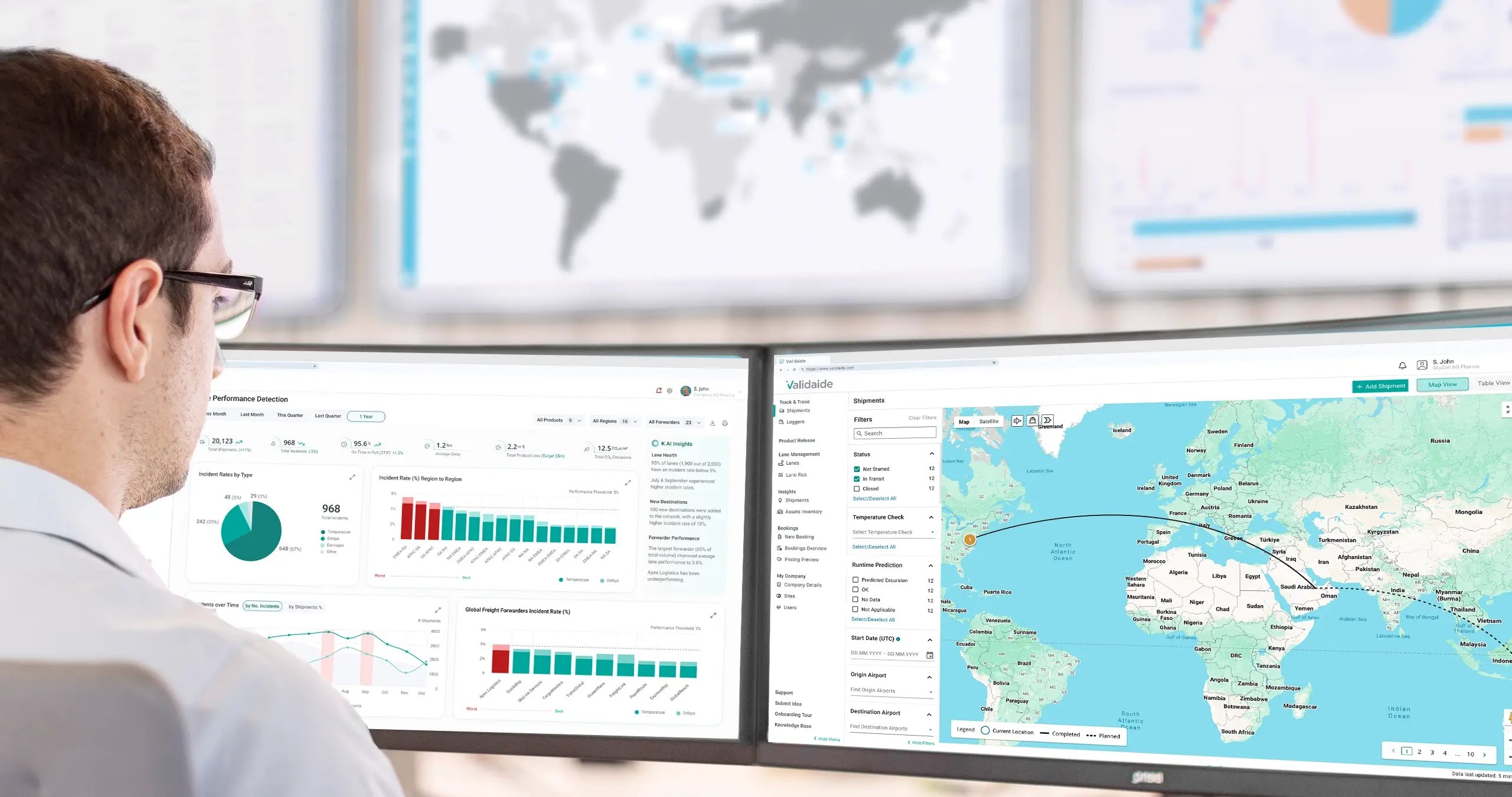
Supply chain visibility is the ability to see what is happening to shipments, inventory, and lanes in real time. Location tracking, temperature monitoring, event feeds, and dashboards all live here. Visibility answers the question "what is happening, and where," and for a long time that was the frontier. A team that could see its shipments live was ahead of one flying blind.
Visibility is necessary. A supply chain that can't see itself can't be managed at all. What visibility does not do is decide or act. It surfaces information and leaves the response to whoever is watching the screen.
What orchestration adds
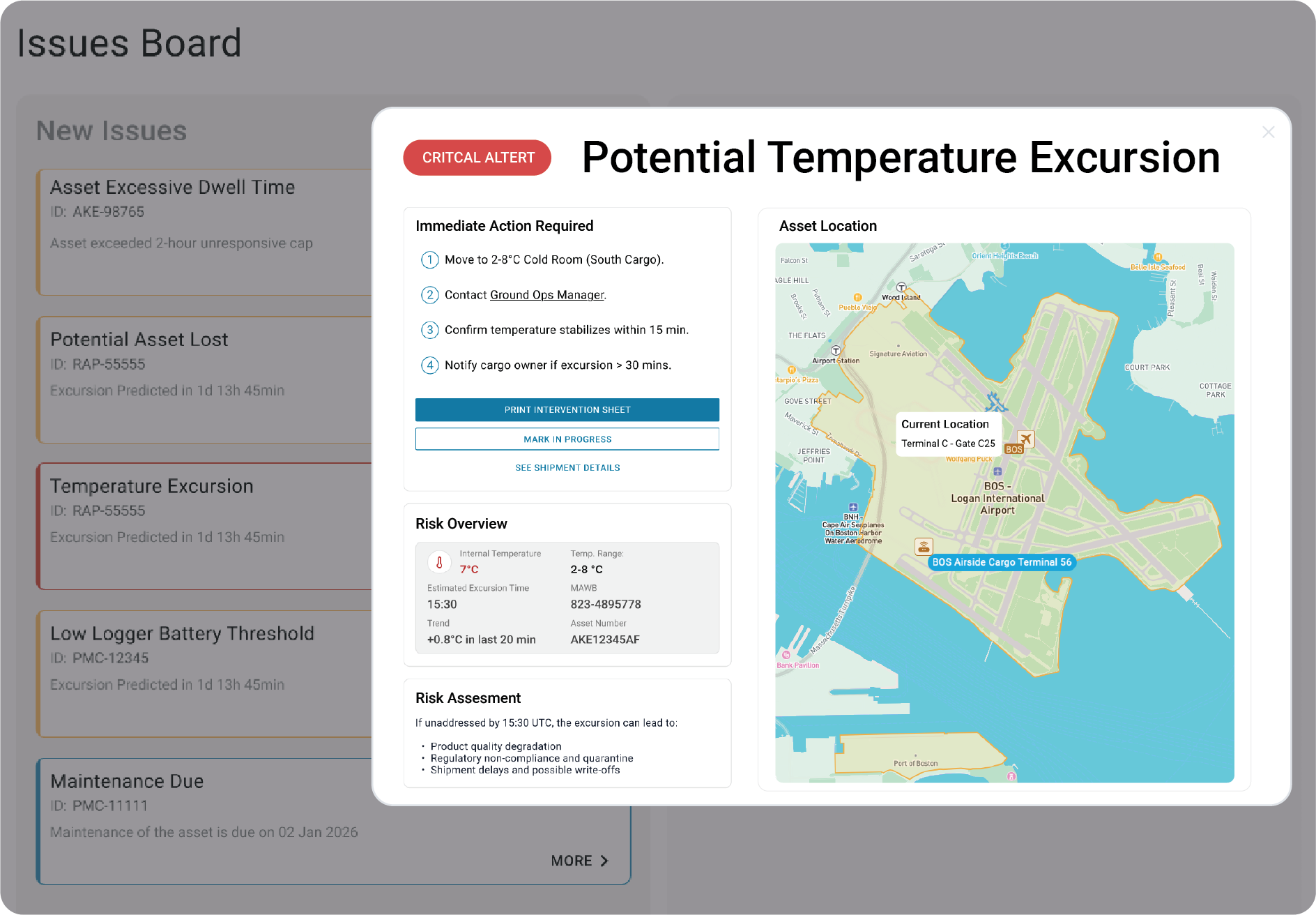
Orchestration is the layer that turns that information into coordinated action across the network. It senses a disruption, works out the options, and drives the chosen response to every partner who needs to act, then records what was done. Where visibility answers "what is happening," orchestration answers "what do we do about it, and who needs to move."
The distinction is the difference between a photograph and a plan. A photograph of a delayed shipment is useful. A plan that reroutes it, adjusts the packaging decision, updates the lane's risk profile, and tells the forwarder and the distributor at the same time is what actually protects the product.
Seeing the two side by side
| |
Supply chain visibility |
Supply chain orchestration |
| Core question |
What is happening, and where? |
What do we do about it, and who acts? |
| Output |
Live data, alerts, dashboards |
Decisions and coordinated actions across partners |
| Handles the response? |
No; left to whoever is watching |
Yes; drives and records the response |
| Scope |
A shipment, a sensor, a screen |
The whole network of partners and lanes |
| On its own, it gives you |
Awareness of a problem |
A coordinated resolution to it |
Read across the rows, and the relationship is clear: orchestration builds on visibility. Visibility is the input. Orchestration is what a team does with the input once it arrives.
Why the gap costs more in pharma
In many industries, the gap between seeing a problem and acting on it costs time and money. In pharma, it can cost the product. A refrigerated shipment carries a finite thermal budget, so the hours between an alert and a decision are hours the product may not have. Visibility that fires an alert at 2 a.m. is only as useful as the coordinated response it can trigger, and an alert with no response attached is a record of a loss, where a coordinated response is what prevents one.
The coordination problem is sharper in pharma too. A single lane can run through a manufacturer, a forwarder, an airline, a ground handler, a customs broker, and a distributor. Visibility gives each of them a view. Orchestration gives all of them the same decision, at the same time, with the reasoning recorded for the audit that will eventually ask for it.
Moving from one to the other
Most pharma teams already have some visibility. The step that changes outcomes is adding the standard and the coordination that turn that visibility into action: one agreed way to score risk across the network, decision logic that connects a risk score to a response, and the means to push that response to every partner at once.
How Validaide closes the gap
Validaide sits on the orchestration side of the line. It takes verified data from more than 1,900 qualified suppliers across over 60,000 assessed lanes and scores every lane on one continuously updated standard, the Dynamic Pharma Index, so risk means the same thing to every partner. From there it connects the decision to the data: a lane's risk score drives its packaging and monitoring requirements, lanes are flagged for reassessment as conditions shift, and the whole network works from one source of truth. Visibility shows a team the excursion. Validaide is built to help the whole network do something about it, together, with the reasoning on record.
References