What the Dynamic Pharma Index Is
The Dynamic Pharma Index is Validaide's standardized risk score for a pharmaceutical shipping lane. It takes verified data from suppliers, packaging, routes, and shipment performance and combines it into a single score that rates how risky a given lane is to ship on. One lane, one score, built the same way every time, so a route out of Frankfurt and a route out of Singapore can be compared on the same scale.

The point of a single index is comparability. When every team and every partner scores risk their own way, "high risk" means something different in every conversation. A shared score gives the whole network one definition of risk, which makes lane decisions faster to agree on and easier to defend in an audit. Validaide describes it as a shared language for risk, and that's the job it's built to do: make risk legible across regions, partners, and routes at once.
The Six Factors Behind the Score
The Index scores each lane across six factors, and the breadth is the point. A lane can be safe on temperature and still risky on security or supplier quality, so a score built on temperature alone misses most of the picture.
-
Product temperature exposure: The predicted ambient temperature the shipment will face along the route, scored leg by leg from the lane's real climate profile, so the worst segment shows through where a trip-wide average would smooth it over.
-
Temperature protection: How much protection the chosen thermal packaging actually provides against that exposure. Exposure and protection are scored together, because a hot lane with strong packaging can carry less risk than a mild lane with weak packaging.
-
Pharma quality management: The pharma handling capabilities of the suppliers on the lane, drawn from Validaide's verified network of qualified providers.
-
Security: The security capabilities and certifications of the partners involved, covering the risk of theft, tampering, and diversion alongside temperature.
-
Duration and complexity: The length of the route and the number of transfer points on it. Every handoff is a place where a shipment can sit on a tarmac or wait out a customs hold, so more legs mean more exposure.
-
Dynamic lane performance: The lane's own track record: real shipment results and the incidents that have actually happened on it. This is the factor that keeps the score honest against reality.
What "Dynamic" Actually Means
Most risk assessments are a snapshot. Someone scores a lane, files the result, and the number sits unchanged until the next scheduled review, aging quietly while the lane underneath it changes. The Dynamic Pharma Index works the other way. As conditions change and incidents occur, live shipment data feeds back into the score automatically, so the number reflects the lane as it is now.
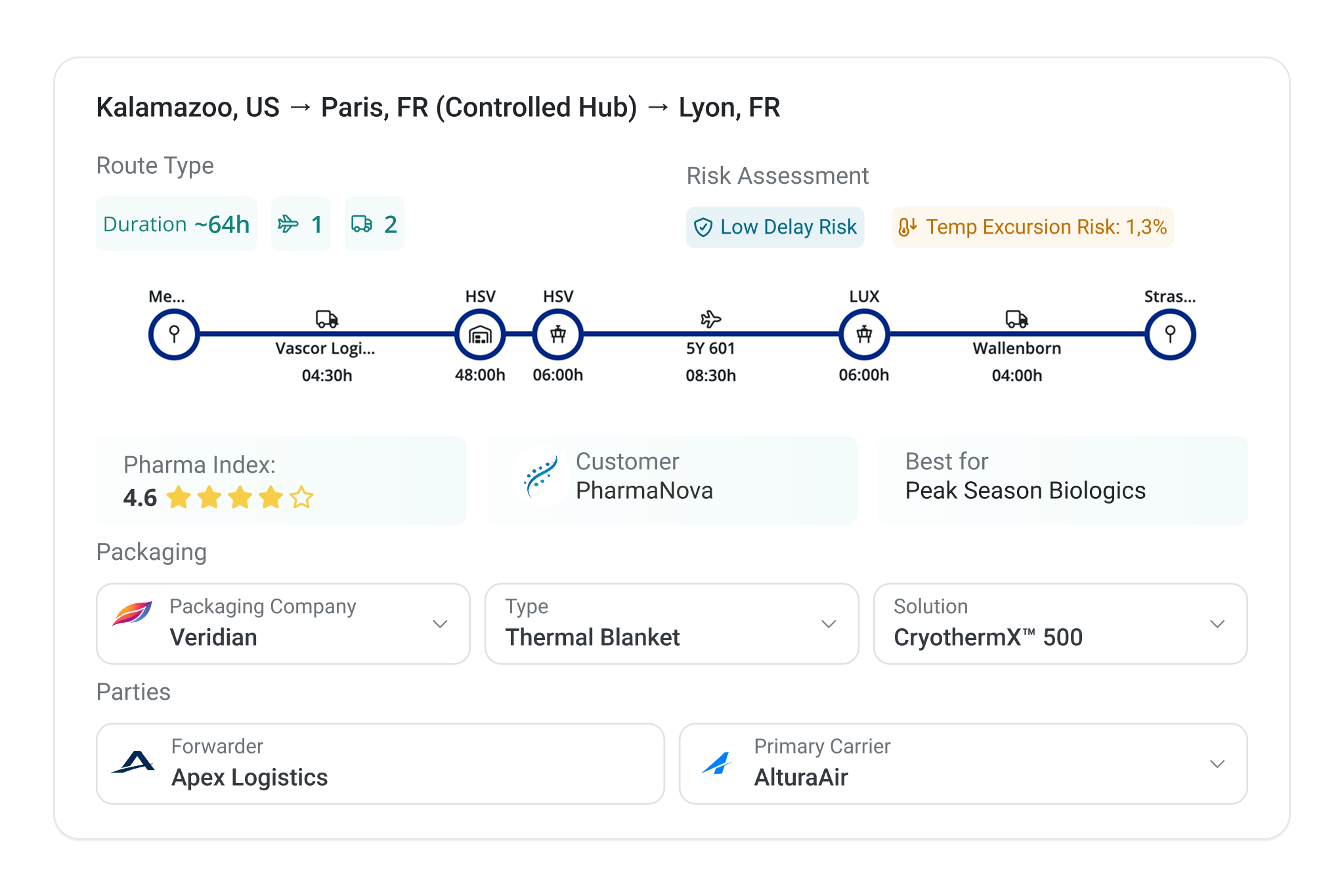
That single property changes what the score is good for. A static assessment tells you what a lane looked like on the day someone last looked at it. A live score tells you what the lane looks like today, which is the only version that helps when a shipment is about to move. When a carrier's performance drifts, a new incident lands on a route, or seasonal conditions turn, the score moves with them, and the lane surfaces for attention before a shipment goes out against outdated evidence.
What the Score Changes in Practice
A comparable, current score is useful because decisions hang off it. Because the Index scores packaging protection against temperature exposure, a lane's risk profile points directly to the container class and monitoring the route actually needs, so packaging decisions follow from the score. Because the score is comparable across the network, teams can rank lanes, spot the riskiest routes in a portfolio, and put controls where they matter. And because it updates on its own, lanes that drift out of tolerance raise their hand before anyone has to go looking.
The scale behind it is part of what makes the score trustworthy. The Index has been run across more than 60,000 pharmaceutical shipping lanes, backed by verified data from over 1,900 suppliers with current pharma handling capabilities. That volume gives each lane a reference point far larger than any one team's memory of how a route usually goes.
References